Episode 15: Tech Meets Art: The Rise of Digital Creatives in Atlanta's Art Scene
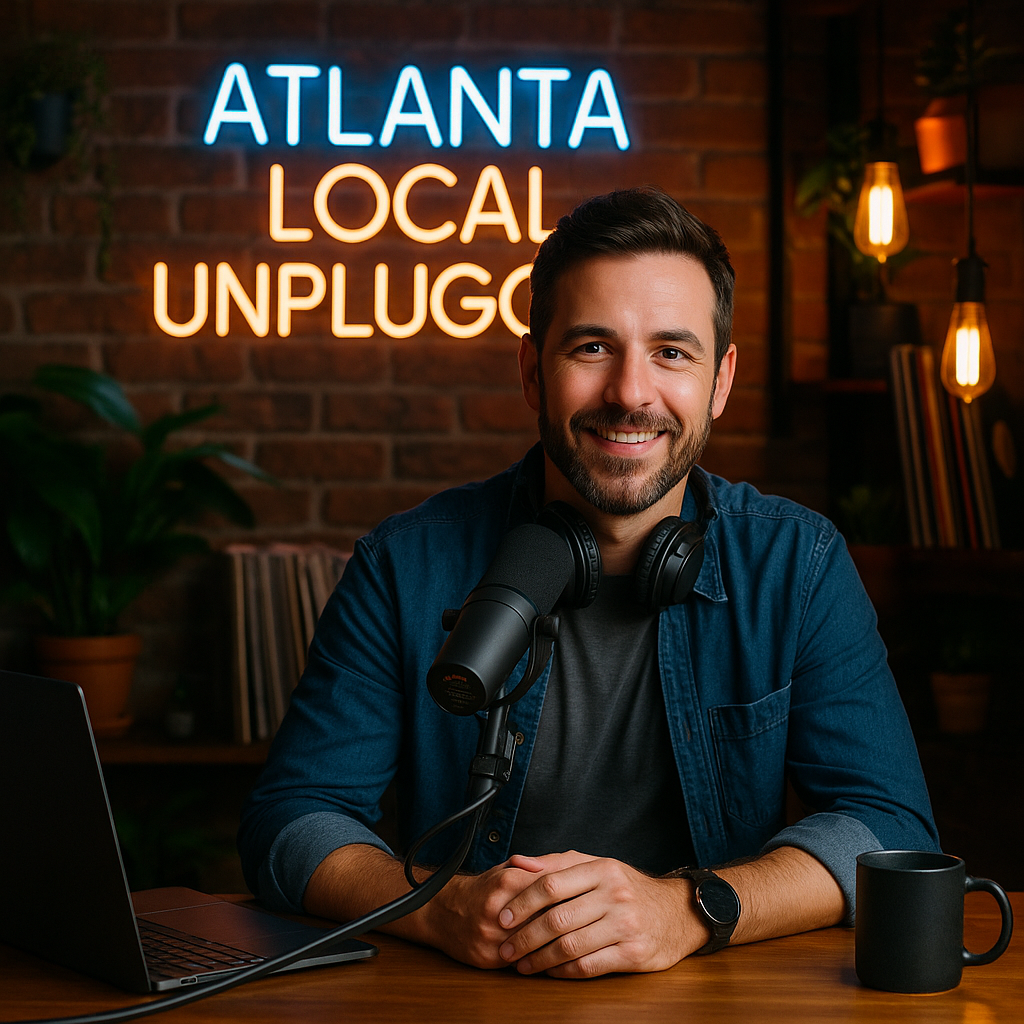
Welcome to Atlanta Local Unplugged, the podcast that explores Atlanta's vibrant local scene for food, music, entertainment, culture, unplugged events, and the many hidden gems in Atlanta. Your host is Riley Bennett. Let's dive in.
Hey Atlanta, I'm Riley Bennett, digital artist and curator.
Today we're exploring tech-driven art across the city. What to see, how it's built, and how to jump in this weekend. I'll share venues, works, food stops, DIY tools, funding, and what's next with locals.
Atlanta is primed for digital creativity because our film and TV ecosystem brings fabrication, stagecraft, and post-production together.
Add Georgia Tech, SCAD, and HBCUs feeding talent, plus startup energy and diverse arts communities, and you get rapid cross-pollination. Musicians, coders, and builders collaborate, turning ideas into public experiences.
On the tools side, you'll see projection mapping, wrapping buildings, LED and light sculpture, and interactive sensors that react to touch or proximity.
Artists prototype and touch designer, Unity, Unreal, and Processing, model and blender, and scan or print in 3D. Generative and AI art, AR filters, and VR round out the palette.
For a polished look at tech forward work, hit Georgia Tech Arts at the First Center, Moda's design-driven exhibits, Atlanta Contemporary's rotating projects, MochaGA's local focus, ABV Gallery's new media lean, and SCAD Atlanta galleries.
These spaces balance experimentation with curation, so you'll catch strong installations alongside talks, workshops, and open house demos.
Out on the streets, art on the Atlanta Beltline lights up parks and tunnels, including Prism, winter lights during colder months. Flux Projects commissions adventurous public works citywide.
Illuminarium delivers ticketed room-scale immersion, and Pullman Yards occasionally hosts spectacular large-format shows. Verify dates, hours, and transit before you go.
Castleberry Hills' Second Friday Art Stroll reliably delivers multimedia pop-ups and projections. Start near Walker Street, grab a map, and build a walkable loop. Some spaces require RSVPs.
Check Eventbrite and Instagram early to secure a slot. Hidden Gems. iDrum rotates experimental performance and media shows in an artist-run spirit.
Mint supports emerging voices, often with new media leanings. The Goat Farm Arts Center campus periodically hosts collaborative events where studios spill outdoors, and you'll find pop-up screenings or interactive pieces.
Expect scrappy, surprising, and community-driven work that rewards curiosity. Weekend Shortlist. A light installation on the Beltline.
Walk at Dusk. A midtown or westside opening with digital work. A downtown flux-style piece.
And one immersive ticketed experience like a luminarium or Pullman Yards. Check schedules, RSVP if needed, and leave travel buffers between time windows. Sound plus visuals.
Terminal West, IELTS 5, and 529 often pair electronic acts with live projection or real-time generative sets. Keep an eye out for modular synth meetups and live coding nights, where code drives music and visuals together.
It's an easy bridge between club culture and gallery experimentation, and collaboration frequently sparks there. Fuel the crawl. In Old Forth Ward, Crog Street Market and Pont City Market offer quick bites near the Beltline.
On the West Side and in Midtown, cluster around West Side Provisions and the Interlock. For Castleberry Hill, grab pre- or post-stroll eats along Walker Street and Peters.
Food pop-ups ride the same circuit as openings and Beltline nights. Follow galleries and curators on Instagram, then watch their story tags for guest chefs. Market-style events often run late, perfect between shows.
Bring cash or tap to pay, expect lines, and consider splitting plates so you can keep moving between installations and sets. Want to make your own? Decatur Makers and the Maker Station in Marietta offer fabrication gear and peer mentors.
Moda and Georgia Tech Arts host workshops. Start with beginner-friendly tools. Touch designers' non-commercial license, processing or P5JS for code art, and Blender for modeling.
Small steps quickly lead to playful prototypes. To fund and scale, look at the City of Atlanta Mayor's Office of Cultural Affairs, Fulton County Arts and Culture, and Georgia Council for the Arts grants.
Commission routes include flux projects and art on the Beltline. Residencies, like Mocha GA's Working Artist Project, and brand and festival collaborations build momentum. Plan with accessibility in mind.
Some installations include strobes, rapid motion, or intense audio. Check advisories for light or motion sensitivity. Wear comfortable footwear, carry water, and layer for outdoor nights.
Many venues have timed entry, arrive early. Use MARTA or Rideshare when parking is tight, and leverage Beltline access points. From the studio side, coders, fabricators, and curators align early on interaction, safety, and daily resets.
Galleries want reliable, learnable experiences. What's next? Spatial computing layers in public space, greener materials, and film TV pipelines feeding installations.
Today, we mapped venues, public works, food pairings, DIY tools, and funding. The value, practical routes to see, support, and join Atlanta's digital art wave. Support artists, buy additions, tip free shows, share links, join newsletters.
And thanks for listening today.
You've been listening to Atlanta Local Unplugged with host Riley Bennett. Until next time, plan fast, explore deep, and enjoy Atlanta.